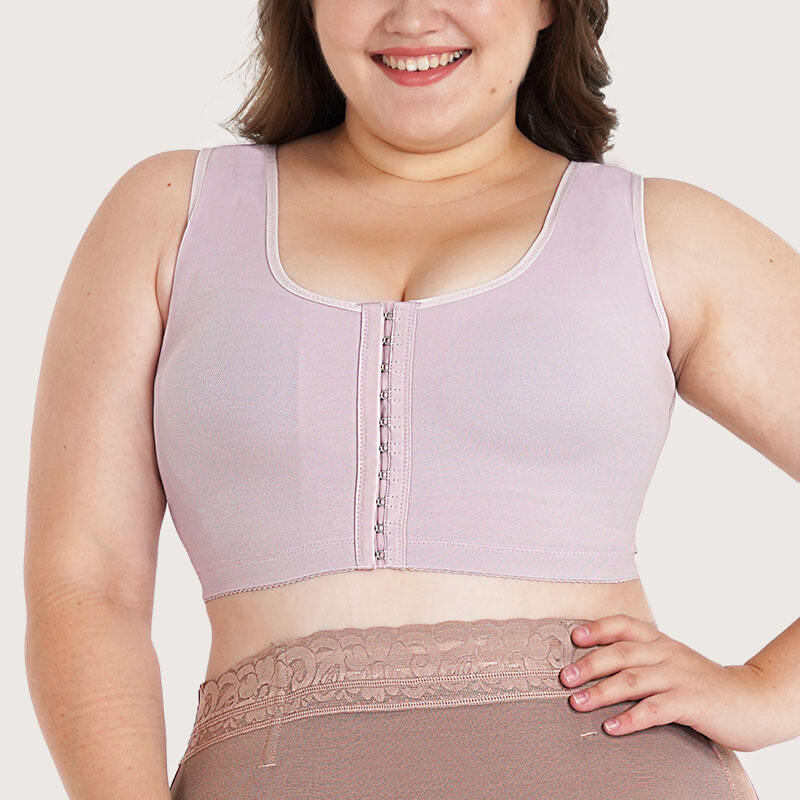
Unlock the secret to bra comfort and confidence by understanding your unique breast shape and how it affects bra fit, support, and style choice.
Table of Contents
1.Understanding Breast Shape
2.Why Identifying Your Breast Shape Is Important
3.Factors That Determine and Influence Breast Shape
4.List of Different Breast Shapes & Descriptions
5.Bra Style Guide: Best Bras for Each Breast Shape
6.How to Identify Your Breast Shape: Step-by-Step Instructions
Understanding Breast Shape
Finding your ideal bra fit starts with a crucial distinction: breast shape is not the same as breast size. While most bra guides and shopping assistants focus heavily on measurements—band size, cup size, and even sister sizing—your actual comfort, support, and appearance hinge on the shape of your breasts rather than the number or letter printed on your tag.
What Is Breast Shape?
Breast shape refers to the natural contour, fullness, position, and spacing of your breasts on your chest wall. It describes factors like whether your breasts have more tissue at the bottom or top, if they point outward or forward, are set close together or apart, or if they are symmetrical or uneven. This shape affects how bras sit, how clothes drape, and which styles provide enough lift and support.
Key Breast Shape Elements
● Fullness: Does most of your breast tissue sit toward the bottom, top, or is it evenly spread?
● Spacing: Are your breasts close together (close-set) or more separated (side-set)?
● Root: The “root” is where your breast attaches to the chest wall—wide roots versus narrow roots make a big difference for bra wire fit.
● Projection: Some breasts project out from the chest (projected shape), while others have a more shallow angle (shallow shape).
● Symmetry: Most women have some asymmetry, but pronounced differences in size or shape can affect fit.
Why Identifying Your Breast Shape Is Important
Breast shape intersects with health and self-image. Understanding your breast’s unique contour helps you:
● Perform more accurate self-exams – You become familiar with your natural breast tissue, making it easier to spot unusual changes early.
● Embrace your natural body shape – With so many breast shapes celebrated by brands like ThirdLove, Honeylove, and Wacoal, you learn to see beauty in diversity, not just in the unrealistic standards often perpetuated by media.
Why Choose S-SHAPER?
Choose S-SHAPER for its OEM/ODM expertise in shapewear. Benefit from precision smart cutting (±0.5mm), seamless knitting technology, and eco-friendly, breathable fabrics. Enjoy full customization from design to branded packaging, plus flexible ODM/OEM options. Driven by a real user-centric story, S-SHAPER ensures quality, comfort, and on-time delivery, making it a trusted long-term partner for your brand.
Factors That Determine and Influence Breast Shape
1. Genetics and Natural Anatomy
Your genes are the single greatest influencer of breast shape and size. Genetics determine variables such as:
● Breast root width: Whether your breasts have wide roots (broad connection to chest wall) or narrow roots.
● Tissue distribution: Fullness at the top, bottom, or evenly across the breast mound.
● Spacing: Close-set breasts versus side set breasts; this impacts cleavage and the need for side support bras.
● Nipple orientation: The direction your nipples point—forward, outward, or slightly down—often depends on inherited tissue structure.
2. Age and Hormonal Changes
Hormones are responsible for breast development during puberty—but that’s not where their influence stops. Throughout your life, you may notice changes in your breast shape due to:
● Menstrual cycles: Temporary swelling and fullness, often leading to size and shape fluctuation monthly.
● Perimenopause and menopause: Breast tissue can become softer or more relaxed, shifting breast shape from, for example, teardrop to more relaxed breasts.
3. Pregnancy and Breastfeeding
● During pregnancy, glands and ducts in the breasts enlarge, which can make breasts appear rounder, fuller, or even bell shaped.
● After breastfeeding, it is common for breasts to become softer, sometimes more relaxed or pendulous, as glandular tissue reduces and fatty tissue becomes more prominent.
4. Significant Weight Fluctuations
● Weight gain: Adds fatty tissue, often making breasts rounder or increasing their size disproportionately to shape.
● Weight loss: Loss of fatty tissue can cause breasts to lose fullness (especially in the upper pole), resulting in a more relaxed or slender appearance.
5. Medical Interventions and Surgery
● Breast augmentations or reductions alter breast shape by introducing implants or removing tissue.
● Reconstructive surgery after mastectomy can provide an entirely new breast shape, depending on the surgical technique and implant or flap choice.
List of Different Breast Shapes & Descriptions
1. Asymmetric Breasts
Description: Breasts are noticeably different in size or shape. This is extremely common—in fact, most women have at least slight asymmetry, while others may see a difference of a full cup size or more.
Fit Challenges:
● Gapping or spillage in one cup
● Uneven appearance in certain bra styles
Solutions:
● Bras with removable pads allow for subtle adjustment (add a pad to the smaller side).
● Memory foam straps and lightly padded bras offer a balanced silhouette.
● Try molded cups or supportive padded bras for symmetry.
2. Athletic Breasts
Description: Wider breast root, less volume throughout, firm breast tissue due to muscle development—common in women who work out regularly or have a naturally muscular chest.
Fit Challenges:
● Gapping at the top of the cup
● Feeling unsupported by soft, non-molded cups
Solutions:
● Molded cups or open-wire bras offer smooth shaping.
● T-shirt bras provide a seamless, natural look.
● Avoid heavily padded bras that may not contour closely to your form.
3. Bell Shaped Breasts
Description: Narrower at the top and significantly fuller at the bottom, resembling a bell. Most commonly seen in women with larger cup sizes or those who have had changes after childbirth and breastfeeding.
Fit Challenges:
● Gaping at the top of the cup
● Underwire digging at the bottom if cup is too shallow
Solutions:
● Full coverage bras cradle the fullness at the base.
● Look for bras with side support or supportive padded bras to lift and center tissue.
4. Relaxed Breasts
Description: Softer tissue, looser structure, often with nipples pointing downward. This can develop naturally with age, post-pregnancy, or after weight loss.
Fit Challenges:
● Need for uplift and support
● Lack of structure in lighter bras
Solutions:
● Lifted, padded, or push up bras restore shaping and enhance projection.
● Balconette bras and side support bras are great choices.
● Memory foam straps can add comfort, especially for heavier breasts.
5. East West Breasts
Description: Nipples point outward, breasts sit further apart on the chest, creating more space between them. This shape is not the same as “side-set” but does share some similarities.
Fit Challenges:
● Difficulty finding bras that bring breasts closer together
● Gaps in the center panel of underwire bras
Solutions:
● Push up bras help bring breasts toward the center.
● Look for bras specifically labeled for “East West” or side support.
● Molded cup bras and padded styles offer shaping and forward projection.
6. Round Breasts
Description: Equally full at the top and bottom, producing a naturally rounded look. Usually projected and symmetrical.
Fit Challenges:
● Cup overflow in smaller bras
● Straps may not stay put if the cup is too small
Solutions:
● Demi-cup, plunge, and push up bras work beautifully.
● T-shirt bras respect your natural curves without extra bulk.
● Bralettes can be especially comfortable and flattering.
7. Side Set Breasts
Description: Noticeable gap between the breasts, wide breast roots, outward orientation, sometimes mistaken for “East West.”
Fit Challenges:
● Bras may not provide enough center pull, leaving a gap in the middle.
Solutions:
● Side support bras realign tissue toward the center.
● Balconette bras and plunge styles bridge the space.
● Avoid bras with overly wide-set straps.
8. Slender Breasts
Description: Thin, long, less volume, and often a gentle downward slope. Can occur naturally or after weight loss.
Fit Challenges:
● Gapping in standard full coverage bras
● Lack of lift in wireless or bralette styles
Solutions:
● Demi-cup and molded bras give gentle lift and natural shape.
● Push up bras and padded styles add fullness as desired.
9. Teardrop Breasts
Description: Gently sloped, less full at the top and fuller at the bottom, like an inverted teardrop. Between round and bell shaped.
Fit Challenges:
● Occasional gapping at the top of the cup
● Full coverage bras may overwhelm natural shape
Solutions:
● Balconette bras flatter the curve.
● T-shirt bras shape softly without fullness at the top.
● Light padding smooths the silhouette.
10. Close-Set Breasts
Description: Breasts touch in the middle or sit very near each other, creating deep cleavage.
Fit Challenges:
● Center wires can press uncomfortably between breasts
● Not all plunge bras provide enough separation
Solutions:
● Plunge bras and bralettes offer comfort and shape without harsh separation.
● Look for open-wire bras to reduce pressure on the breast bone.
11. Conical Breasts
Description: Cone-like appearance, often smaller overall; less rounded, more pointed than other shapes. Common among younger women or those with minimal breast tissue.
Fit Challenges:
● Standard molded cups can gape
● Lack of fullness means some bras won’t mold perfectly
Solutions:
● Lightly padded or molded bras provide subtle shaping.
● Bralettes and soft cup bras avoid forcing a “round” look.
12. Pendulous Breasts
Description: Heavy, low-set, significant natural slope. Often results from significant weight loss, aging, or post-pregnancy changes.
Fit Challenges:
● Finding bras with strong enough lift
● Cups or bands that ride up from the weight
Solutions:
● Full coverage, supportive bras with firmer underwire and strong bands.
● Supportive padded bras or side support bras distribute weight evenly.
Quick Comparison Table of Breast Shapes, Features, and Best Bra Match
| Shape |
Distinguishing Feature |
Great Bra Styles |
| Asymmetric |
Uneven size/shape |
Removable pads, molded, foam straps |
| Athletic |
Wide root, low volume, muscular |
Molded cups, T-shirt bras |
| Bell Shaped |
Narrow top, full bottom |
Full coverage, side support |
| Relaxed |
Soft, downward slope |
Push up, padded, balconette |
| East West |
Outward nipples, wide set |
Push up, side support, molded |
| Round |
Full at top & bottom |
Demi, plunge, bralette |
| Side Set |
Wide gap, outward orientation |
Side support, balconette, plunge |
| Slender |
Thin, long |
Demi, push up, molded |
| Teardrop |
Full bottom, sloped top |
Balconette, T-shirt, light padding |
| Close-Set |
Touch or nearly touch at center |
Plunge, bralette, open-wire |
| Conical |
Cone-like, pointed |
Light padding, molded, soft cup |
| Pendulous |
Low, heavy, full slope |
Full coverage, supportive, padded |
Bra Style Guide: Best Bras for Each Breast Shape
Best Bra Styles by Breast Shape
| Breast Shape |
Common Fit Issues |
Best Bra Styles |
Special Features to Look For |
| Asymmetric |
Uneven appearance, cup gaping |
Bras with removable pads, memory foam cups, molded bras |
Removable/included pads, memory foam, flexible cups |
| Athletic |
Cup gapping, broad chest |
T-shirt bras, molded cups, open-wire bras |
Wider bands, side smoothing, flexible structure |
| Bell Shaped |
Gapping at cup top, underwire dig |
Full coverage bras, supportive bras, side support bras |
Side support panels, strong bands, firm underwire |
| Relaxed |
Lack of lift, downward slope |
Push up bras, padded bras, balconette bras |
Uplifting features, light padding, memory foam |
| East West |
Wide spacing, outward nipples |
Push up bras, side support bras, molded bras |
Centering panels, angled cups, front closure |
| Round |
Spillage, cup overflow |
Demi-cup bras, plunge bras, bralettes |
Soft stretch fabric, adjustable straps |
| Side Set |
Wide gap, outward tissue |
Side support bras, balconette bras, plunge bras |
Side support panels, centralized cups |
| Slender |
Cup gaping, lack of lift |
Demi-cup bras, lightly padded bras, push up bras |
Snug fit cups, gentle padding |
| Teardrop |
Top cup gaping, minimal top fullness |
Balconette bras, T-shirt bras, lightly padded bras |
Contoured cups, flexible wire or seamless edge |
| Close-Set |
Center wire dig-in, lack of cleavage |
Plunge bras, open-wire bras, wireless bralettes |
Low/wide gore, soft support, deep plunge |
| Conical |
Pointed shape, cup gaps |
Lightly padded bras, molded soft bras, triangle bras |
Soft contouring, light lining |
| Pendulous |
Sagging, unsupportive fit |
Full coverage bras, supportive bras, wide band bras |
Firm bands, reinforced sides, strong straps |

 Hot News