Table of Contents
1.Introduction
2.Average Breast Sizes Around the World
3.Factors Influencing Breast Size
4.The Large Bust Guide – What Is Considered a Large Bust?
5.Choosing the Right Bra for a Large Bust
Introduction
Breast size is often discussed for its influence on confidence, comfort, and health. Defining a large bust goes beyond cup sizes, encompassing physical, aesthetic, and psychological aspects. For some, a fuller chest enhances self-image; for others, it can cause discomfort or medical issues such as back pain or macromastia. This guide explores what qualifies as a large bust through accurate measurements, averages, and medical insights, while offering advice on fit, support, lifestyle adjustments, and relief options to help women navigate both the benefits and challenges of a larger breast size.
Average Breast Sizes Around the World
Global Variation in Average Breast Size
Extensive studies and surveys have tried to estimate the average breast size in various regions. The differences can be quite striking. For example, women in certain Western countries are statistically more likely to wear larger cup sizes compared to women in many Asian or African countries. However, these data are also influenced by factors such as body fat distribution, genetic factors, lifestyle, and even the popularity of breast augmentation or breast reduction.
Table: Estimated Average Bra Sizes by Country
| Country/Region |
Estimated Average Bra Size |
Comments |
| United States |
34DD/E |
Bra industry reports a steady increase |
| United Kingdom |
36D |
Higher rates of breast augmentation |
| Germany/Scandinavia |
36C-D |
Genetic factors, generally larger frames |
| Brazil/Latin America |
36C-D |
Popularity of breast augmentation |
| Japan/China |
34B-C |
Smaller average frame, shifting upward |
| India |
34B |
Cultural and genetic influences |
Factors Influencing Breast Size
1. Genetic Factors
Genetics play the most significant role in a woman’s bust size. You inherit your breast volume, density, and shape largely from your parents’ side of the family. If the women in your family tend to have large breasts, there is a higher likelihood you will too.
● Breast tissue and density: Some genes influence how much glandular vs. fatty tissue you have, which can impact how firm or full your breasts appear.
● Chest wall shape: The width and contour of your ribcage and chest wall set the stage for overall breast projection.
2. Body Fat and Weight Changes
Breasts are composed largely of adipose (fat) tissue.
● Weight gain can lead to an increase in breast size—sometimes pushing women with moderate busts into the large bust category.
● Weight loss will typically reduce bust size, though the effects are not always symmetrical.
Tip: Even moderate body fat reduction through a combination of eating more fiber, exercising regularly, and a balanced diet can affect both bust and overall body proportions.
3. Hormonal Factors
Hormones are powerful drivers of breast development, growth, and changes throughout a woman’s life:
● Puberty: Estrogen and growth hormones trigger initial growth and development of the breast tissue.
● Pregnancy: During pregnancy, hormonal surges lead to rapid increases in bust size to prepare for breastfeeding.
● Menopause: Breast tissue often becomes less dense and sometimes smaller as estrogen levels drop.
● Birth control and hormone therapies can sometimes increase breast size due to fluid retention or increased glandular tissue.
4. Age and Life Stages
● Young adulthood: Most women finish developing breast tissue by their late teens or early twenties.
● Childbearing years: Breasts may expand and fluctuate with pregnancies, breastfeeding, or miscarriages.
● Menopause and later: Some women experience reduced breast volume and increased sagging, while others maintain a larger size.
5. Exercise and Physical Activity
While chest exercises (like pushups or chest presses) can strengthen the muscles beneath the breast tissue, they do not directly enlarge or shrink the breasts. However, regular exercise helps maintain a healthy body fat percentage and may lead to modest shifts in bust size for some women.
6. Non-Surgical Lifestyle Factors
● Hormone-disrupting foods: Consumption of foods high in phytoestrogens (like soy) can sometimes influence breast growth or sensitivity.
● Herbal supplements: Some claim to increase bust size naturally (e.g., fenugreek, fennel), but these should be approached cautiously and only with medical guidance.
● Bras and clothing fit: Wearing supportive bras is crucial for women with large breasts, as it contributes to comfort, posture, and the natural shaping of breast tissue over time.
Why Choose S-SHAPER?
Choose S-SHAPER for its OEM/ODM expertise in shapewear. Benefit from precision smart cutting (±0.5mm), seamless knitting technology, and eco-friendly, breathable fabrics. Enjoy full customization from design to branded packaging, plus flexible ODM/OEM options. Driven by a real user-centric story, S-SHAPER ensures quality, comfort, and on-time delivery, making it a trusted long-term partner for your brand.
The Large Bust Guide – What Is Considered a Large Bust?
What Is a Large Bust? (And How Do You Know If You Have One?)
While there is some subjectivity depending on culture and body build, most medical and lingerie professionals agree:
● D cup and above (especially in band sizes 34 and higher) is commonly the starting point for what is considered a large bust in Western sizing.
● In smaller band sizes (32 or less), a C or D can appear quite large due to proportion.
● Truly large busts—sometimes referred to as macromastia in medical terms—are characterized not just by cup size, but also the weight and volume of breast tissue and their impact on physical comfort.
Common Criteria for Large Bust:
● Bra size: Generally D cup or larger
● Band size: Often 34 or higher
● Breast projection: Notable fullness and distance from chest wall
● Functional impact: Presence of physical discomfort (back/neck pain, skin irritation, etc.)
Table: Bust Size Categories (Approximate Guidelines)
| Category |
Typical Sizes (US) |
Description |
| Small Bust |
AA–B |
Less projection, easier to find clothing fit |
| Medium Bust |
C–D (up to 34 band) |
Average fullness, minimal functional challenges |
| Large Bust |
D+ (all bands), C+ (in small bands) |
Significant projection, may require special support |
| Very Large Bust |
DD/E+, G+ |
Often results in physical challenges, specialty bras |
Large Bust, Full Bust, and Plus Size: What’s the Difference?
● Large Bust / Full Bust: Refers to cup size specifically, not band size. Full-bust brands cater to women who are average or even petite in body size but have larger cups (DD+).
● Plus Size: Relates mainly to band size (38 and up), which may or may not coexist with large cups.
Comparison Table: Large Bust vs. Full Bust vs. Plus Size
| Term |
Cup Size Focus |
Band Size Focus |
Typical Fit Challenges |
| Large Bust |
Yes (D+) |
Sometimes |
Support, projection, finding correct band |
| Full Bust |
Yes (DD+) |
Any |
Support, cup depth, symmetrical fit |
| Plus Size |
Sometimes |
Yes (38+) |
Cup depth, strap strength, body proportions |
What to Do If You Have a Large Bust
1.Get Professionally Fitted: Even if you’ve always worn a particular size, a proper bra fitting can change everything—especially if you’ve experienced weight, age, or hormonal changes.
2.Seek Support: Specialty bra brands, sports bras, and clothing with bust darts or extra stretch are your allies.
3.Consider Medical Advice if Uncomfortable: If you face chronic pain, consult a breast health professional or clinic like Cayra Clinic for evaluation and options, which may range from physiotherapy to breast reduction or other interventions.
Choosing the Right Bra for a Large Bust
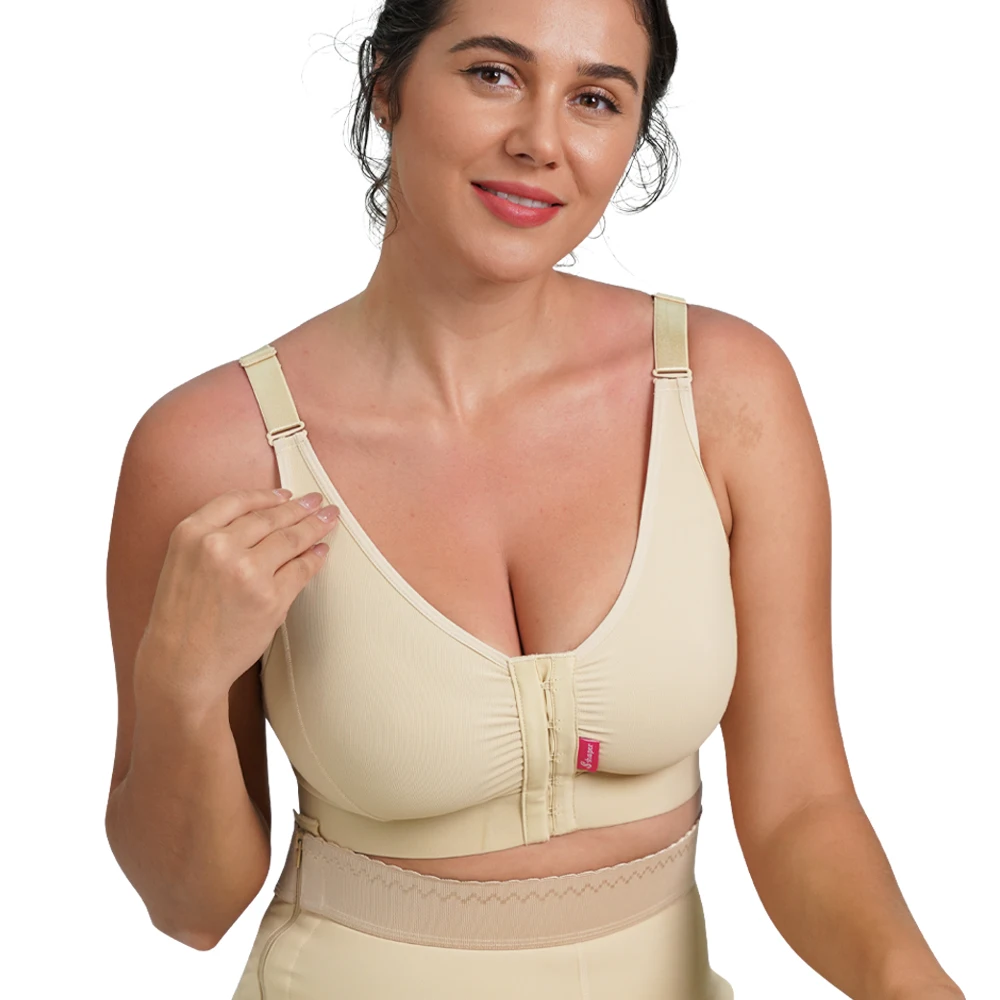
Features to Look for in Bras for Large Bust Size
● Wide, Padded Straps: Distribute weight evenly and reduce the risk of deep grooves on your shoulders.
● Firm, Wide Band: More than 80% of a bra’s support comes from the band, not the straps. A wider band stays in place, anchors support, and prevents your bra from riding up.
● Full-Coverage Cups: Encapsulate each breast, preventing “quad-boob” and spillage while maintaining natural breast shape and minimizing projection.
● Underwire or Support Panels: For many women with a large bust, underwires (when properly sized) provide crucial lift. Some bras use wide, reinforced side or bottom panels for additional shaping and separation.
● Three or More Hook Closures: More hooks mean better weight distribution and a more secure fit for heavier breasts.
● Quality Materials and Seams: Sturdy, breathable fabrics, reinforced stitching, and smooth seams help with both durability and minimizing irritation
Table: Recommended Bra Features by Support Level Needed
| Challenge |
Feature to Prioritize |
Example Style |
| Back/neck pain |
Wide, padded straps and firm band |
Full-coverage underwire |
| Bra band rides up |
Wider band, correct band size |
Longline bra |
| Cup spillage or “quad boob” |
Full-coverage, deeper cups |
Full-cup or balconette |
| Exercise discomfort |
Encapsulating sports bras |
High-impact sports bra |
| Strap grooves |
Extra-wide, cushioned straps |
Minimizer, supportive everyday |
Best Types of Bras for Large Busts
1.Full-Coverage Bras: Essential for day-to-day comfort and minimization of bounce or overspill.
2.Balconette and Plunge Bras: Offer lift without the constriction some full-cups create; perfect for dresses and lower necklines.
3.Minimizer Bras: Distribute breast tissue for a slightly smaller silhouette—helpful for reducing projection beneath work shirts or uniforms.
4.Sports Bras: Look for styles that encapsulate (separate each breast) rather than just compress. Brands like Panache or Enell are noted for their large-cup, high-impact support.
5.Custom or Specialty Bras: Some companies offer custom sizing for unique proportions, such as narrow bands with larger cups or asymmetrical breasts.

 Hot News